
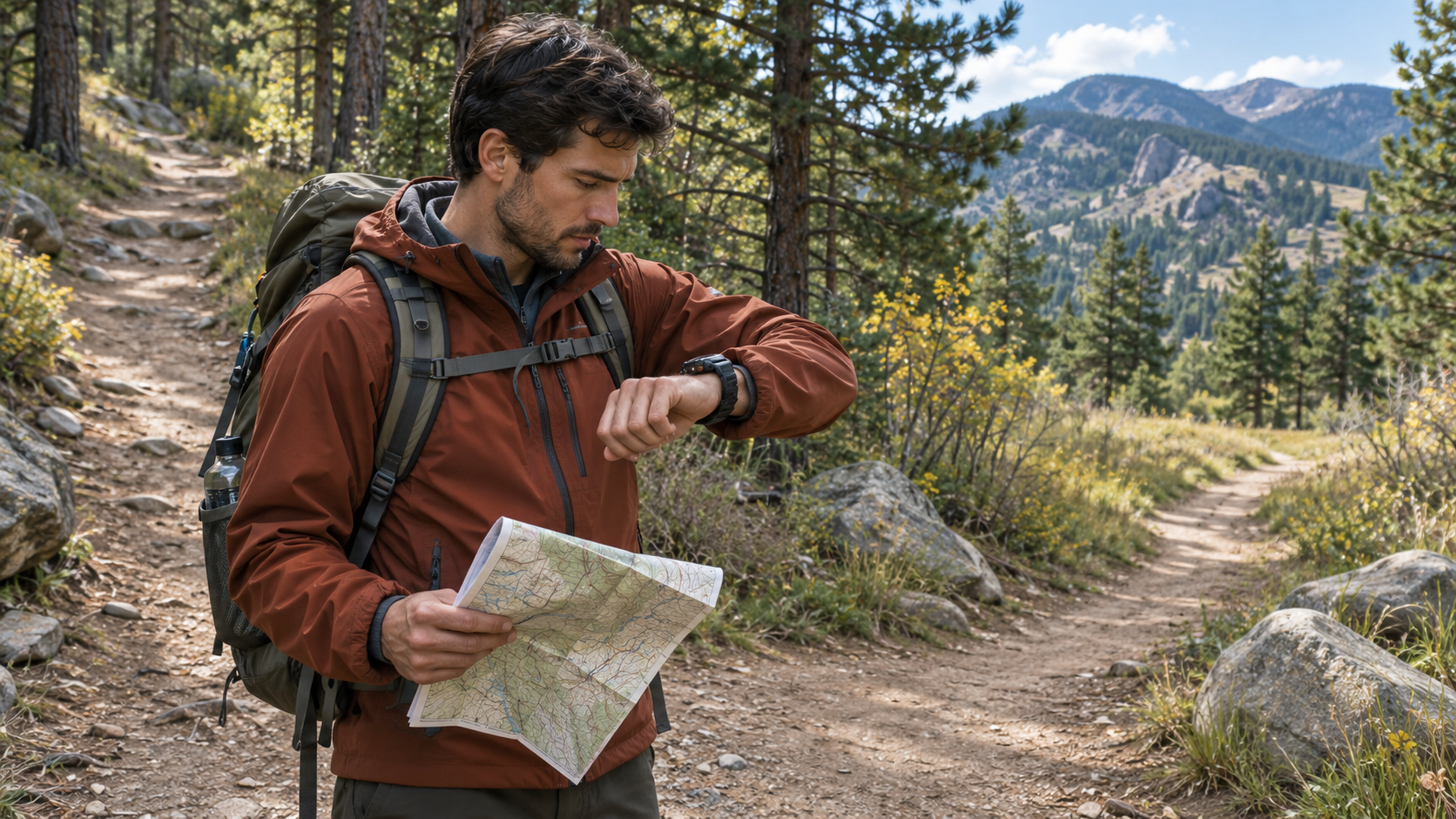
The overlook is half a mile away. You’ve already walked three miles, the trail is getting steeper, and someone says, “We’re almost there.” Before you decide, ask how long it will take everyone to get back. A turnaround time gives you a decision you can make before the overlook is in sight.
Work Backward From Your Return Deadline
Check local sunset, park hours, and any fixed deadline, such as the last shuttle. Choose when you want to be back at the trailhead. Then subtract your estimated return travel time and a buffer for delays. Salt Lake County Search and Rescue recommends accounting for daylight, terrain, and the group’s pace when choosing when to turn around. SLCOSAR
| Planning step | Example |
|---|---|
| Planned arrival at trailhead | 4:00 p.m. |
| Estimated return from the overlook | 1 hour 45 minutes |
| Buffer for unexpected delays | 30 minutes |
| Latest planned departure from the overlook | 1:45 p.m. |
In this example, 1:45 p.m. is when the group needs to leave the overlook. Arriving at 1:40 p.m. leaves five minutes there. If you’re still short of the overlook at 1:45 p.m., head back from where you are, assuming the return route remains safe. Use a buffer that fits your group and route.
Estimate the Return as Its Own Hike
Look at the elevation profile in both directions. A trail that descends to a river or canyon on the way out may leave most of the climbing for the return. On other trails, steep or uneven descents can slow the group down. Build your estimate around the person who needs the most time and account for ordinary stops.
Use an early landmark as a checkpoint. If you expected to reach the creek junction at 11:00 a.m. and arrive at 11:30, review the rest of the route while you still have options. A long break may explain the delay. If the group is also moving more slowly than expected, revise the return estimate. The junction or a nearer viewpoint may be a better destination for the day.
Agree on What Would Make You Turn Earlier
Changing weather, a route you can no longer follow confidently, or a group member who is struggling can call for an earlier decision. Check current park notices and weather before leaving, and carry a headlamp in case your return takes longer than planned. SLCOSAR
Tell the group the turnaround time before you start. Set a reminder ahead of it so you can assess where you are. If you’re considering a loop, identify a junction where retracing your steps is still a practical option. At that junction, compare the time and conditions on each route before continuing.
Write Three Times on Your Trip Plan
Record your planned return time, first checkpoint time, and latest turnaround time. Share your route and expected return with someone who is staying behind, along with what you want them to do if you miss your check-in. If you choose a shorter outing, check in once you’re safely back so they know the trip has ended.